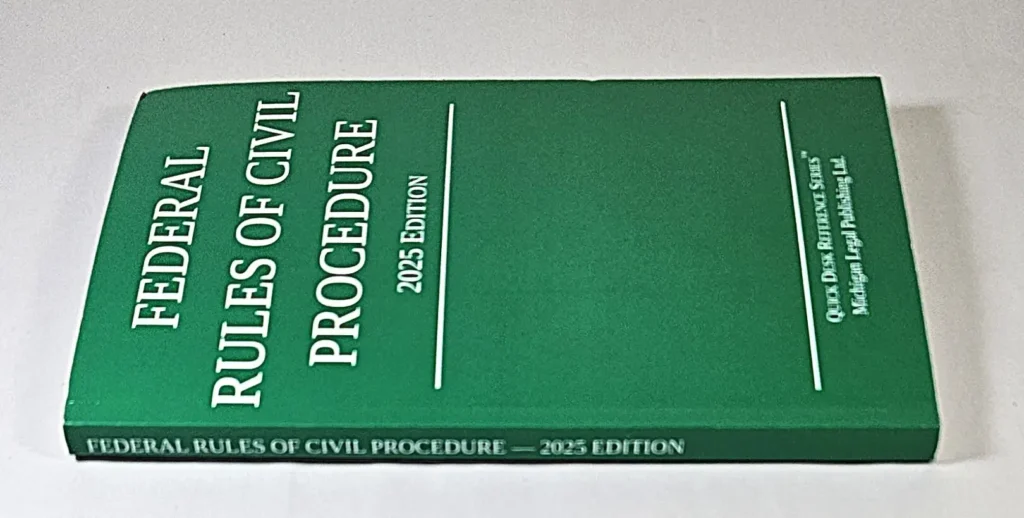
Reviewed for accuracy against FRCP 6, 12, and 56, and controlling case law including Pioneer Investment Services Co. v. Brunswick Associates. Reviewed by Sarah Mitchell, J.D. Last updated: July 12, 2026.
Thank you for reading this post, don't forget to subscribe!You’ve drafted the perfect motion to dismiss. Your arguments are airtight, your citations impeccable. You hit “file” at 11:47 PM, confident you’ve met the 21-day deadline. The next morning, the court clerk’s rejection notice hits your inbox: “Untimely filing.”
The problem? You counted calendar days when you should’ve counted business days. Or you forgot that FRCP 6(d) adds three days for electronic service. Or you miscalculated because a federal holiday fell within your deadline window.
These aren’t hypothetical scenarios; they happen in federal courts every single day. One miscounted deadline can mean a waived defense, a defaulted client, or a malpractice claim. For attorneys and paralegals working in federal civil litigation, understanding FRCP deadline rules isn’t just important; it’s survival.
This guide breaks down the four critical deadline provisions you need to master: FRCP 6 (time computation), FRCP 12 (responsive pleading deadlines), FRCP 56 (summary judgment timing), and the case law governing Rule 6(b) extensions. Need to run the actual calculation? Use our Federal Court Deadlines Calculator to get your exact date, or our Legal Deadline Calculator for non-federal deadline types. If you’re working a case in California state court instead, see our California court deadline calculator for CCP §12c and state-specific holiday rules.
No fluff, no theory, just practical guidance on how to calculate these deadlines correctly and avoid the mistakes that derail cases.
Understanding FRCP Deadline Rules: The Foundation
Before we dive into specific rules, here’s what makes federal deadline calculation different from state court practice: the Federal Rules don’t play by intuition.
The FRCP deadline rules follow their own logic system, defined in FRCP 6. You can’t assume “21 days” means three weeks. You can’t guess whether to include or exclude the triggering event. You need to know the actual mechanics, because federal judges have zero patience for deadline excuses.
Why These Rules Matter Together
Think of FRCP 6, 12, and 56 as a system, with Rule 6(b) as the safety valve:
- FRCP 6 is your calculation engine; it tells you how to count any deadline
- FRCP 12 sets the deadlines for responsive pleadings and pre-answer motions
- FRCP 56 governs summary judgment timing, which can make or break your case before trial
- FRCP 6(b) governs when a court can extend any of the above — and the standard is much stricter than most attorneys assume (see the case law section below)
Miss any piece of this puzzle, and you’re calculating wrong.
How Does FRCP 6 Calculate a Federal Court Deadline?
FRCP 6(a): Computing Time
Rule 6 doesn’t set deadlines; it tells you how to count them. Every time another rule says “within 14 days” or “within 21 days,” FRCP 6(a) controls the math.
When a period is stated in days or longer:
- Exclude the triggering event day
- Count every subsequent day, including weekends and holidays
- If the last day falls on a weekend or legal holiday, the deadline extends to the next business day
When a period is stated in hours:
- Start counting immediately
- Include weekends and holidays
- Different rules apply (but most federal deadlines use days, not hours)
FRCP 6(d): Additional Time for Electronic Service
This is the provision that catches everyone at least once: when you’re served electronically (not when you file electronically), you get 3 additional calendar days to respond.
Real-World Calculation Example
Let’s say opposing counsel emails you a motion to dismiss on Monday, May 1st. Under FRCP 12(a)(4), you have 21 days to respond. Here’s how you count:
- Exclude May 1st (the service date)
- Start counting May 2nd as Day 1
- Add 3 days for electronic service (FRCP 6(d))
- Your deadline is 24 calendar days from May 1st
But wait, if day 24 falls on Saturday, May 27th, your actual deadline becomes Monday, May 29th (the next business day). Unless May 29th is Memorial Day, in which case it becomes Tuesday, May 30th.
See why people mess this up? Run the numbers yourself with our Federal Court Deadlines Calculator.
The “Intermediate Saturday, Sunday, or Legal Holiday” Exception
Here’s where FRCP 6 gets tricky. When a deadline is 10 days or less, you exclude intermediate Saturdays, Sundays, and legal holidays from the count. This applies to things like objections to discovery or certain emergency motions.
Most attorneys forget this exception exists because most federal deadlines exceed 10 days. But when you’re dealing with a 7-day or 5-day deadline, this rule becomes critical.
FRCP 12: Responsive Pleading and Motion Deadlines
The Core FRCP 12 Deadline Framework
Rule 12 sets your response timeline after being served with a complaint or other pleading:
| Defendant Type | Response Deadline | Governing Rule |
|---|---|---|
| Domestic defendant (standard) | 21 days after service | FRCP 12(a)(1)(A) |
| United States, U.S. agency, or U.S. officer/employee | 60 days after service | FRCP 12(a)(1)(A)(ii)–(iii) |
| Defendant served outside the United States | 90 days after service | FRCP 12(a)(1)(A)(iv) |
| After denial of a Rule 12(b)/(e)/(f) motion | 14 days after denial or notice | FRCP 12(a)(4) |
The Strategic Implications
Here’s what experienced litigators know: filing a FRCP 12(b)(6) motion to dismiss doesn’t just give you more time; it can fundamentally change your case strategy.
Let’s say you’re served on June 1st. Your answer is due June 22nd (21 days, excluding service date, no electronic service because the summons was hand-delivered). If you file a motion to dismiss on June 15th, you’ve now paused the answer clock.
The court might not rule for 60-90 days. During that window, you’re not locked into admissions or denials. You can conduct informal discovery, assess settlement options, or wait for related cases to develop case law.
But here’s the catch: once the court rules, you have only 14 days to answer. That’s barely enough time to draft a comprehensive answer with affirmative defenses if you haven’t been preparing.
Common FRCP 12 Deadline Mistakes
1. Forgetting the “Demand for Jury Trial” Deadline: FRCP 38(b) requires jury demands within 14 days of service of the last pleading. Many attorneys assume they can add it later. By the time they realize the deadline passed, they’ve waived their client’s Seventh Amendment right.
2. Miscounting After Amended Complaints: When a plaintiff files an amended complaint, your response deadline resets, but the timeline depends on whether the amendment was as of right (FRCP 15(a)(1)) or by leave of court. Under FRCP 15(a)(3), you typically have 14 days to respond to an amended pleading, not the full 21 days.
3. Assuming Extension Motions Are Automatic: Many paralegals draft a motion for extension of time, file it on day 20, and assume they’re covered. Wrong. Unless opposing counsel stipulates or the court grants the motion before your deadline expires, you’re in default territory. Federal judges don’t grant retroactive extensions except in extraordinary circumstances — see exactly how strict this standard is below.
When Courts Grant (and Deny) Extension Motions Under Rule 6(b)
FRCP 6(b) allows a party to ask the court for more time — but the standard depends entirely on whether you ask before or after your deadline expires, and courts apply it far more strictly than most attorneys assume.
Before the Deadline: The “Good Cause” Standard
If you file your extension motion before the original deadline expires, courts apply the more lenient good cause standard — reasons like scheduling conflicts, unexpected illness, or the need for additional discovery time are generally sufficient.
After the Deadline: The Pioneer “Excusable Neglect” Standard
If you’re asking for more time after your deadline has already passed, the standard is much stricter: excusable neglect, defined by the U.S. Supreme Court in Pioneer Investment Services Co. v. Brunswick Associates, 507 U.S. 380 (1993). Courts weigh four factors:
- The length of the delay and its impact on the proceedings
- Whether the delay will prejudice the opposing party
- The reason for the delay, including whether it was within the movant’s reasonable control
- Whether the movant acted in good faith
In Lemoge v. United States, 587 F.3d 1188 (9th Cir. 2009), a court denied an extension where the delay had already caused real prejudice to the opposing party — a reminder that “I have a good reason” isn’t enough on its own once your deadline has already passed; the court is also weighing the cost to the other side.
The Deadlines Rule 6(b) Cannot Touch.
Some deadlines fall completely outside Rule 6(b)’s reach, no matter how compelling your excuse. In Bowles v. Russell, 551 U.S. 205 (2007), the Supreme Court held that statutory deadlines — like the notice of appeal deadline under 28 U.S.C. § 2107 — are jurisdictional, not subject to extension under Rule 6(b) or any other equitable doctrine. If a deadline comes from a statute rather than a court rule, assume it’s a hard stop.
FRCP 56: Summary Judgment Timing That Can End Your Case
Understanding FRCP 56 Deadlines
Summary judgment is where cases live or die before trial. Rule 56 doesn’t set a specific deadline for when you can file, but it controls the response timeline and establishes critical procedural requirements.
FRCP 56(b): Timing for Summary Judgment Motions. A party can move for summary judgment at any time until 30 days after the close of discovery. Most courts set case-specific deadlines in their scheduling orders, but this is your outer limit.
FRCP 56(c): Response Deadline.s When served with a summary judgment motion, you have 21 days to file your response (subject to FRCP 6(d)’s additional 3 days for electronic service).
The party moving for summary judgment can file a reply within 14 days after the response.
Why Summary Judgment Deadlines Are Different
Unlike FRCP 12 motions, summary judgment involves extensive briefing, declarations, expert reports, and evidentiary exhibits. Twenty-one days isn’t much time when you need to:
- Draft a comprehensive opposition brief
- Prepare declarations from witnesses
- Compile relevant deposition excerpts
- Respond to opposing counsel’s statement of undisputed facts
- File your own counter-statement of facts
This is why experienced litigators never wait until the last week to start preparing their opposition.
The Statement of Facts Trap
Many local rules require specific formats for statements of undisputed material facts. In some districts, if you don’t respond to each numbered paragraph in the movant’s statement of facts, those facts are deemed admitted.
I’ve seen attorneys lose winnable cases because they filed a beautiful legal brief but forgot to file the separate statement of disputed facts that the local rule required. The court deemed all facts admitted and granted summary judgment.
Pro tip: The moment you receive a summary judgment motion, check your local rules for statement of facts requirements. Some districts want them in the brief; others want separate documents. Some have paragraph numbering requirements. Know this before you start writing.
How to Calculate FRCP Deadlines Without Mistakes
Step-by-Step Deadline Calculation Process
1. Identify the Triggering Event: What started the clock? Service of the complaint? Notice of the court’s ruling? The triggering event determines your calculation’s starting point.
2. Determine the Deadline Period. Look at the specific rule. Is it 14 days? 21 days? 30 days? Don’t guess — check the actual rule citation.
3. Exclude the Triggering Event Day. This is where most mistakes happen. If you were served on Monday, Monday is Day 0, not Day 1.
4. Check for Electronic Service: Was service by email, ECF notification, or other electronic means? Add 3 days under FRCP 6(d). (Note: electronic filing doesn’t trigger this — only electronic service.)
5. Apply the Last-Day Rule: If your deadline falls on a weekend or legal holiday, move to the next business day. Check both federal holidays and any days when the court clerk’s office is closed.
6. Check Local Rules: Some districts have local rules that modify or supplement the federal rules. Always verify.
Tools and Systems That Actually Work
Docket Management Software Programs like Clio, PracticePanther, or Deadlines on Demand calculate FRCP deadlines automatically. But here’s the reality: these tools are only as good as the data you input. If you enter the wrong service date or forget to check the “electronic service” box, the software will calculate the wrong deadline.
Manual Calendar Systems: Many successful attorneys still use the “three-calendar” system:
- Master deadline calendar
- Buffer calendar (2-3 days before the actual deadline)
- Personal task calendar
When a deadline is docketed, it goes on all three calendars. The redundancy catches mistakes.
The Federal Holidays List: Keep the current year’s federal holiday list pinned somewhere visible. You’d be surprised how many deadline calculations fail because someone forgot about Columbus Day or Juneteenth.
Common FRCP Deadline Mistakes and How to Avoid Them
1. The “Midnight” Filing Assumption: Many attorneys think filing by 11:59 PM satisfies a deadline. Most federal courts use midnight in the court’s time zone, not your time zone. If you’re in California, filing in the Southern District of New York, midnight EST is 9:00 PM your time.
Some courts have even stricter rules; their CM/ECF systems lock at 11:59 PM, and technical difficulties aren’t an excuse.
Solution: Treat all deadlines as if they end at 5:00 PM local court time. If you’re filing after business hours, you’re already in dangerous territory.
2. Relying on Opposing Counsel’s Calculation: Never trust opposing counsel’s deadline calculation, even if they’re trying to be helpful. They’re not responsible for your malpractice insurance premiums.
Calculate independently, and if your calculation differs from theirs, verify with the local rules and consider calling the clerk’s office.
3. Ignoring Local Rules and Standing Orders: The FRCP sets baseline requirements, but local rules add layers. Some districts require courtesy copies of certain motions. Others have judge-specific standing orders that modify standard deadlines.
Example: Some judges in the Central District of California require summary judgment motions to be filed 35 days before the hearing date, not just within the FRCP 56 window. If you don’t check the judge’s individual procedures, you’ll miss this.
4. Forgetting About Service Time: You calculated your filing deadline perfectly, but did you account for service time? FRCP 5(b)(2) requires service “within a reasonable time after filing.” Some local rules specify that service must occur on the same day as filing.
If you file your opposition to summary judgment at 11:45 PM, you might not have time to properly serve opposing counsel before midnight.
Pro Tips for Mastering Federal Deadline Practice
1. Build Backward From Court Hearings: If there’s a hearing scheduled, work backward. Factor in reply deadlines, response deadlines, and any local rules about filing deadlines before hearings. Create a reverse timeline so you know when work must actually be completed.
2. Use the “Three-Day Rule” for Everything. Pretend every deadline is three days earlier than it actually is. This buffer accounts for technology failures, unforeseen complications, and basic human error. The attorneys who never miss deadlines aren’t the ones with perfect calendaring; they’re the ones with built-in cushions.
3. Confirm Electronic Service Actually Worked: ECF generates automatic service notices, but glitches happen. Email filters catch things. Attorneys change firms, and their old email becomes inactive. When you serve something important, confirm receipt, especially for large summary judgment oppositions with multiple exhibits.
4. Master Your Court’s CM/ECF Quirks. Every district’s CM/ECF system has idiosyncrasies. Some require you to file the motion and supporting documents as separate entries. Others want them bundled. Some have file size limits that force you to split exhibits.
Learn these quirks before you’re racing against a deadline. Practice filing dummy documents if necessary.
5. Know When to Ask for Extensions. Filing an extension motion isn’t a sign of weakness; it’s smart practice management. But timing matters, and as the Pioneer factors above show, courts are far more receptive to extension requests filed 10-14 days before the deadline than requests filed on the deadline day or after.
And always, always propose a specific extension date in your motion. Don’t ask for “a reasonable extension,” ask for “a 14-day extension, making the deadline June 30, 2026.”
Frequently Asked Questions
How many days do I have to respond to a complaint in federal court?
Generally 21 days after service under FRCP 12(a)(1)(A) for domestic defendants, 60 days for the United States or a U.S. agency/officer, and 90 days for defendants served outside the U.S.
Does electronic service add time under FRCP 6(d)?
Yes — 3 additional calendar days when you’re served (not when you file) electronically, by mail, or by leaving papers with the clerk.
What happens if a federal deadline falls on a weekend or holiday?
Under FRCP 6(a)(1)(C), the deadline extends to the next day that isn’t a Saturday, Sunday, or legal holiday.
Can I get an extension of time under FRCP 6(b)?
Yes, but the standard depends on timing. Before your deadline expires, courts apply the more lenient “good cause” standard. After it expires, you need to show “excusable neglect” under the stricter Pioneer factors — a much harder standard to meet.
What is excusable neglect under Rule 6(b)?
A standard from Pioneer Investment Services Co. v. Brunswick Associates (1993) that weighs the length of the delay, its impact on the case, prejudice to the opposing party, and whether the delay was within your control.
Does filing a motion to dismiss pause my answer deadline?
Yes. Under FRCP 12(a)(4), filing a Rule 12(b), 12(e), or 12(f) motion resets your answer deadline to 14 days after the court rules on the motion or gives notice of its action.
Are federal court deadlines the same as California state court deadlines?
No. California state courts follow the Code of Civil Procedure (CCP §§ 12, 12a, 12c) rather than the FRCP, and observe their own judicial holidays. See our California Court Deadline Calculator for the complete rules.