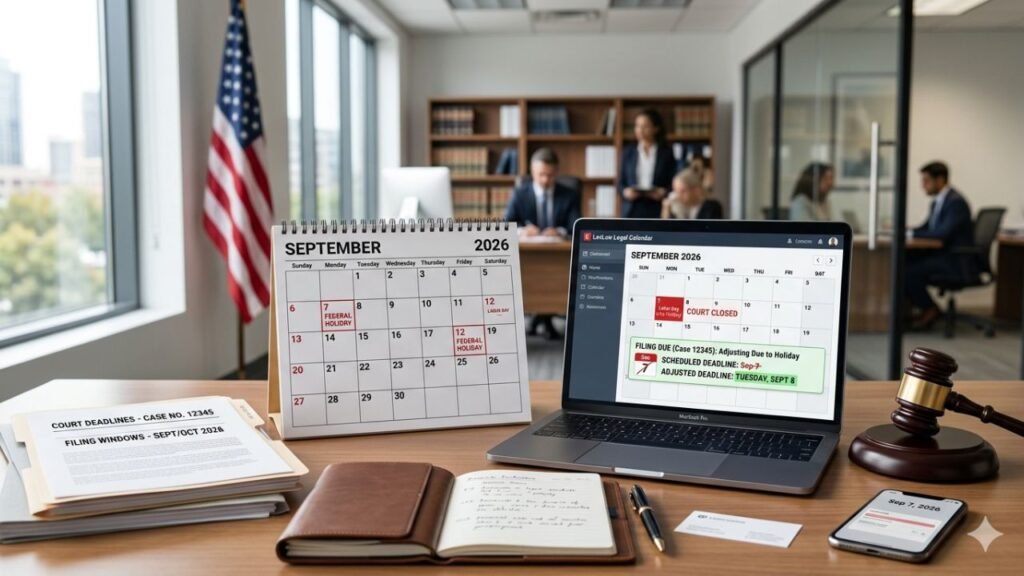
Picture this: You’re a day away from a crucial filing deadline. You’ve prepared everything, checked it twice, and you’re ready to submit. Then you realize it’s a federal holiday tomorrow, and the court is closed. Now what?
Thank you for reading this post, don't forget to subscribe!If you work in the legal field, manage business operations, or simply need to file something with the court system, the federal holiday schedule isn’t just a calendar note. It’s a critical factor that can change your deadlines, affect your case outcomes, and sometimes cost you thousands in missed opportunities. And 2026? That year comes with its own unique challenges and deadlines you need to know about.
The truth is, many people don’t realize how deeply federal holidays impact the judicial system. Courts don’t operate on holidays, which means your filing windows shift, deadlines get extended, and the entire timeline of your legal matters can be affected. Whether you’re filing taxes, submitting court documents, or managing business compliance, understanding the 2026 federal holiday schedule is essential.
In this guide, we’ll walk you through every federal holiday in 2026, explain exactly how they impact court deadlines and filing windows, and give you practical strategies to stay on top of your game. Let’s dive in.
Understanding Federal Holidays and the Court System
Before we jump into 2026’s specific schedule, let’s clarify how federal holidays actually affect courts and filing deadlines.
When federal courts close for a holiday, the rules surrounding deadlines change. Federal Rule of Civil Procedure 6(a) states that when a deadline falls on a day when the court is closed, the deadline automatically extends to the next business day. Sounds simple, right? But in practice, this creates confusion because different courts interpret these rules slightly differently, and state courts often have their own variations.
Here’s what you need to know: just because you think you have until Friday doesn’t mean you do if that Friday is before a federal holiday weekend. The courts might effectively give you until Monday, or they might not, depending on local rules.
How Court Holidays Impact Filing Deadlines
The Consecutive Holiday Problem
Let’s talk about the elephant in the room: consecutive holidays or holidays before weekends. This is where things get tricky.
Take Independence Day in 2026. The Fourth falls on Saturday, but the federal government observes it on Friday, July 3rd. That means the court closes on Friday the 3rd. If you were planning to file something that day, you’re out of luck. But it gets worse if your deadline was supposed to be Friday the 3rd; it automatically extends to the following Monday, July 6th.
This seemingly small shift can have a cascading effect. If you’re in the middle of discovery, responding to motions, or managing multiple deadlines, this extension might bump into other filing dates you hadn’t anticipated.
State vs. Federal Courts
Here’s something that catches people off guard: state courts and federal courts don’t always follow the same holiday schedule. While federal courts are bound by the federal holiday schedule, state courts can set their own rules. Some states observe holidays that federal courts don’t, and vice versa.
For example, many Southern states observe Robert E. Lee’s birthday on January 19th, the same day as MLK Jr. Day in 2026. But the federal courts only recognize MLK Jr. Day. If you’re filing in both state and federal courts in those states, you need separate calendars for each system.
The 2026 Holiday Clusters: Your Critical Dates
Summer Shutdown Zone (July 3-6)
The July 3rd federal holiday creates a four-day weekend because it falls right before the weekend. Any deadlines that would normally fall on July 3rd push to Monday, July 6th. If you have depositions, motion responses, or document exchanges scheduled during this period, you’re looking at potential delays.
Practical impact: Plan for mid-July filing. If you have control over scheduling, try to avoid setting deadlines in the week leading up to the Fourth.
Fall Holiday Marathon (September-November)
Fall is brutal. You’ve got Labor Day (September 7), Columbus Day (October 12), Veterans Day (November 11), and then the Thanksgiving two-day holiday cluster (November 26-27). That’s four significant court closures in less than three months.
What makes this particularly challenging is that October and November are traditionally heavy filing periods for end-of-year business matters and holiday season disputes.
Year-End Squeeze (November-December)
The holiday season deserves special attention. With Thanksgiving and Christmas holidays stacked back-to-back in a short month, December filing becomes increasingly compressed. Christmas falls on a Friday in 2026, which means the court will be closed both Thursday and Friday.
Impact on Specific Types of Legal Filings
Criminal Cases
Criminal defendants and prosecutors need to be especially careful. Speedy trial rights create strict timeline requirements that aren’t suspended for holidays. However, courts can extend deadlines due to holidays. If you’re the defendant and a holiday pushes your trial date, this could potentially work in your favor (more time to prepare). If you’re the prosecution, trying to meet deadlines, it’s the opposite.
Civil Litigation
Civil cases have more flexible deadlines, but they’re still affected. Discovery cutoff dates, motion filing deadlines, and expert report submission dates can all shift. And here’s the thing: if multiple deadlines cluster around a holiday, the cascading effects multiply. One delayed motion response can derail the entire case schedule.
Family Law Matters
Family law cases are uniquely time-sensitive. Custody orders, child support modifications, and divorce proceedings often involve hard deadlines set by judges. Holidays can delay these critical filings, which affects children and families. If you’re navigating a family law matter in 2026, being aware of the federal holiday schedule is essential for protecting your interests and your children’s welfare.
Bankruptcy and Insolvency
Bankruptcy has incredibly strict filing windows. Missing a deadline can result in case dismissal, and holidays don’t suspend these requirements. Bankruptcy trustees, creditors, and debtors all need to understand how 2026’s holidays affect the bankruptcy calendar.
Practical Tips for Managing 2026 Court Deadlines
Tip #1: Build in Holiday Buffers
The safest approach is to treat federal holidays as office closures plus one business day before. If you have a Friday deadline and Monday is a federal holiday, don’t file on Friday afternoon. File by Thursday, end of business. This gives you protection against technical issues, processing delays, and unforeseen complications.
Tip #2: Use Holiday-Aware Calendar Software
Invest in legal calendar software that automatically accounts for federal holidays. Manual calendars work, but they’re error-prone. Software like Clio, TimeSolv, or even Google Calendar with legal holiday overlays can send you alerts weeks in advance.
Tip #3: Check Local Court Rules
Your local federal court or state court might have specific holiday rules that differ from the general federal schedule. Some courts extend their closures, while others have abbreviated hours before major holidays. Call the courthouse or check their website. This five-minute phone call can save you from missing a critical deadline.
Tip #4: Plan Around Summer and Fall Blackouts
July and September are naturally slow legal months anyway, but 2026 makes them slower. If you’re managing your own schedule, batch non-deadline work during these periods. Save deadline-intensive projects for less cluttered months.
Tip #5: Communicate Proactively with All Parties
If you’re involved in litigation or any matter with multiple parties, send reminders about upcoming holidays and adjusted deadlines. A simple email: “Just reminding everyone that July 3rd is a federal holiday, so our deadline will be extended to July 6th” prevents disputes and surprises.
Real-World Example: How Holidays Almost Derailed a Case
Let me share a hypothetical scenario that happens more often than you’d think:
Sarah is an attorney managing a civil case with a motion deadline of July 2, 2026. She’s confident she’ll file on Thursday morning. But then a client doesn’t send final comments until Thursday evening. By Friday morning, she’s ready to file, but July 3rd is a federal holiday. The court is closed.
Here’s where it gets interesting: under the federal rule, her deadline technically extends to Monday, July 6th. But she’s not sure if that’s Friday or Monday, and she starts sweating. She calls the court to ask. The clerk confirms Monday.
But now Monday is the new deadline, and Sarah realizes she has a client meeting that day. She works over the weekend and files Sunday night through the court’s electronic filing system. It goes through without issue, making her deadline.
The point? One federal holiday forced Sarah to work a weekend and created unnecessary stress. Had she known the 2026 schedule and planned accordingly, she could have simply pushed back the client meeting or prepared earlier.
Frequently Asked Questions
If a holiday falls on a weekend, does it still affect my weekday deadline?
Only if the court officially observes it on a different day. For example, if July 4th falls on a Saturday, federal courts close on Friday, July 3rd. Yes, it affects your Friday deadline. However, if the holiday officially falls on a Sunday, it’s typically observed on Monday. Check your specific court’s holiday schedule to be sure.
Can I e-file on a federal holiday?
A: Most electronic filing systems accept submissions 24/7, so technically yes. However, your filing is timestamped when received, and if the deadline is a holiday, it might not meet the deadline even if filed electronically. This is a gray area; always confirm with your court.
What if my statute of limitations expires on a federal holiday?
This is critical: statutes of limitations are rarely suspended for holidays at the federal level. However, state laws vary significantly. Some states extend statutes of limitations when they expire on a holiday. You must research your specific state and case type immediately if this applies to you.
Do bankruptcy courts follow the federal holiday schedule?
Yes, bankruptcy courts are federal courts, so they observe all federal holidays. However, bankruptcy has unique filing requirements and strict deadlines, so verify specific dates with the bankruptcy court clerk.
How should I adjust my internal business deadlines around federal holidays?
Set internal deadlines at least one business day before the court deadline. If the court deadline is Monday, July 6th (after the holiday), set your internal deadline for Friday, July 3rd. This gives you buffer room for problems.
Conclusion
The federal holiday schedule for 2026 isn’t something to stress about; it’s something to plan around. Yes, there are some challenging clusters, particularly around July and the fall months. Yes, holidays do extend deadlines and create confusion. But armed with the right information and a solid planning strategy, you can navigate 2026’s court calendar like a pro.
Here’s your action plan: First, print out the 2026 federal holiday schedule and post it somewhere visible. Second, update your calendar system to include these holidays and set automatic reminders. Third, review the specific rules for your local courts, because they might have slightly different procedures.
Remember, the courts aren’t trying to trick you with holidays; they’re just closed. But those closures do create real consequences for deadlines, filings, and case timelines. By understanding how federal holidays impact the court system and planning accordingly, you’ll avoid the stress, missed deadlines, and costly mistakes that catch others off guard.
Whether you’re a legal professional, a business owner managing compliance, or someone navigating a personal legal matter, respecting the federal holiday schedule in 2026 is non-negotiable. Mark those dates, set those reminders, and give yourself the peace of mind that comes from being organized and prepared.